Your website is often the first impression potential customers have of your business. But what happens when that first impression is working against you? Many businesses carry on with websites that are actively damaging their brand, losing leads, and haemorrhaging revenue—without even realising it.
At The Website Design Agency, we speak with business owners every week who know something isn't quite right with their website, but aren't sure whether it's time to invest in a redesign. The truth is, there are clear, measurable indicators that signal when your site has gone from asset to liability.
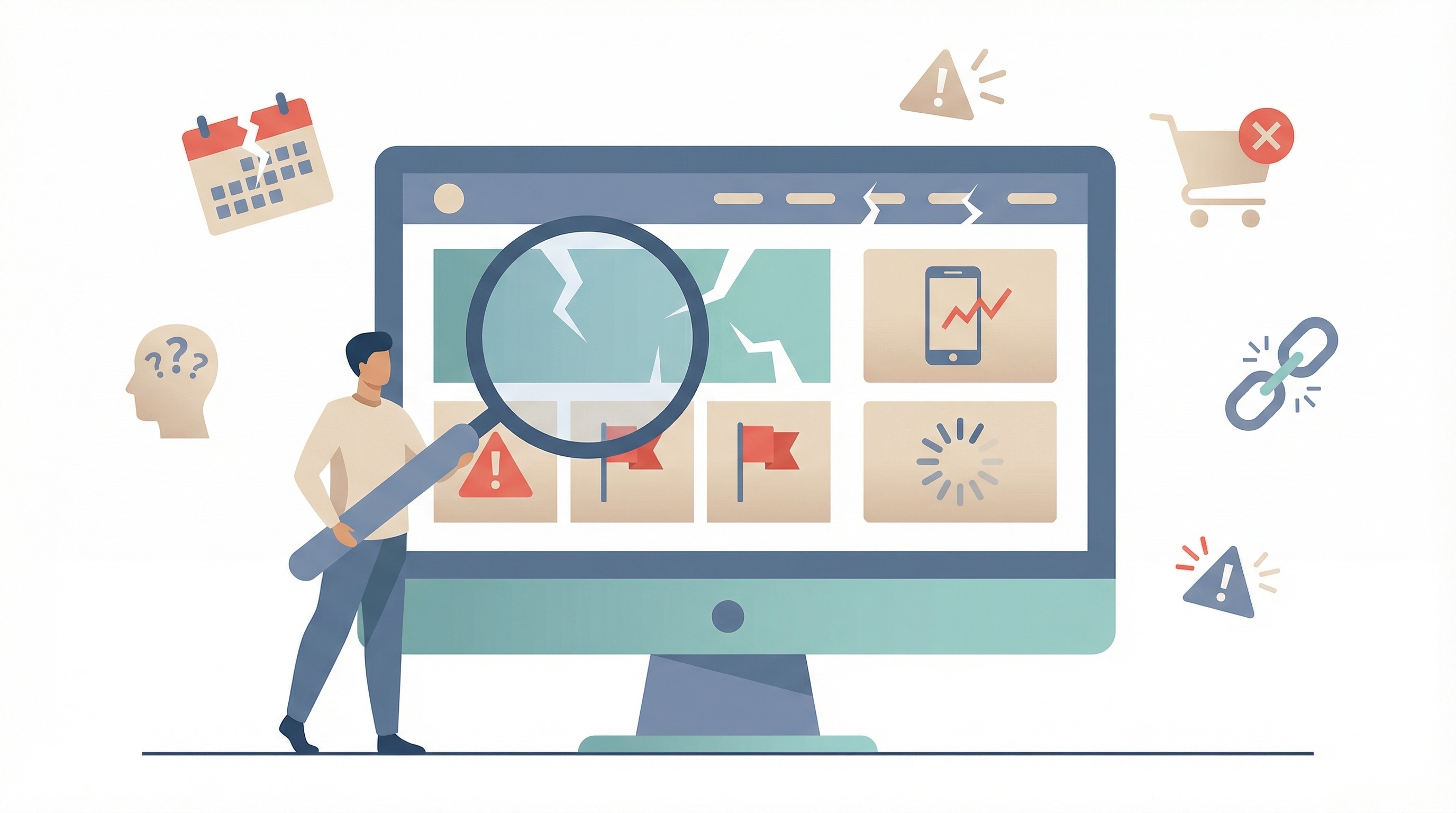
In this guide, we'll walk through seven red flags that mean it's time to refresh your website. Whether you're seeing declining traffic, poor conversion rates, or simply feeling embarrassed when you share your URL, these warning signs will help you make an informed decision.
This is the big one. According to Statista, mobile devices account for over 60% of global website traffic in 2026. If your website doesn't work beautifully on smartphones and tablets, you're actively turning away the majority of your potential customers.
Warning signs your mobile experience is failing:
Google's mobile-first indexing means your mobile site is now the primary version used for search rankings. If it's broken, your SEO is suffering. Beyond rankings, though, the user experience matters. Research from Google shows that 53% of mobile users abandon sites that take longer than three seconds to load or are difficult to navigate.
The fix: A responsive redesign that prioritises mobile users isn't optional anymore—it's business-critical. This means designing with a mobile-first mentality, testing across multiple devices, and ensuring every interaction works smoothly on touch screens.
Nothing kills conversions faster than a slow website. Google research has found that as page load time increases from one to five seconds, the probability of bounce increases by 90%. That's not a typo—nine out of ten potential customers will leave before they even see your content.
How to check if you have a speed problem:
Common speed culprits include oversized images, bloated code, too many plugins, poor hosting, and lack of caching. Many older websites were built before performance was a ranking factor, and they're now paying the price.
The impact goes beyond rankings: Slow sites feel unprofessional. They suggest your business doesn't care about user experience or doesn't have the technical capability to deliver quality. In competitive markets, that perception can be fatal.
The fix: A modern rebuild using performance-first principles—optimised images (WebP format), clean code, fast hosting, CDN delivery, and lazy loading—can transform your site speed and, consequently, your conversion rates.
Web design trends evolve quickly, and what looked modern five years ago can feel distinctly old-fashioned today. While you shouldn't chase every trend, certain design patterns signal to visitors that your business hasn't kept up with the times.
Dated design elements that age your site:
Design matters because it communicates your values before a single word is read. A dated website suggests your business might be behind the curve in other areas too. Conversely, a modern, well-considered design builds immediate trust and credibility.
Important note: Modern doesn't mean trendy. The goal is timeless, professional design that will age well while still feeling current. We focus on clean layouts, generous whitespace, strong typography, and accessibility—principles that work now and will continue working for years.
The numbers don't lie. If your analytics show high bounce rates (users leaving after viewing just one page) and declining conversion rates, your website isn't doing its job.
Metrics to monitor:
High bounce rates can indicate numerous problems: slow loading, poor design, confusing navigation, irrelevant content, or a mismatch between what ads/links promise and what the page delivers.
The business cost is real: If you're driving traffic through paid ads, SEO, or social media but your website can't convert that traffic, you're pouring money down the drain. Even a modest improvement in conversion rate—say from 2% to 3%—represents a 50% increase in leads from the same traffic.
The fix: A conversion-focused redesign should include clear calls-to-action, trust signals (testimonials, certifications, case studies), streamlined user journeys, and regular A/B testing to continually improve performance.
If updating your website requires calling a developer for every minor change, your site is holding your business back. In 2026, content management should be straightforward, fast, and achievable by non-technical team members.
Signs your CMS is the problem:
This isn't just an inconvenience—it's a strategic weakness. Your competitors can respond to market changes, publish timely content, and update messaging quickly. If you can't, you're always playing catch-up.
Modern solutions like Webflow provide visual, intuitive content management that empowers teams to maintain their sites without ongoing developer dependency. This means faster updates, lower costs, and the ability to keep your site fresh and relevant.
Accessibility isn't optional—legally, ethically, or strategically. Around 1 in 5 people in the UK have some form of disability, according to the Office for National Statistics. If your website isn't accessible, you're excluding millions of potential customers.
Common accessibility failures:
Beyond the moral imperative, there's a legal one. The Equality Act 2010 requires businesses to make reasonable adjustments for disabled users. Public sector sites must meet WCAG 2.1 AA standards, and private companies face increasing scrutiny.
The SEO benefit is real too: Accessible websites use semantic HTML, descriptive text, and clear structure—all factors that search engines reward. Accessibility improvements often correlate directly with better search visibility.
The fix: An accessibility-focused redesign following WCAG 2.2 guidelines ensures everyone can use your site, reduces legal risk, and often improves overall user experience for all visitors.
This one might sound subjective, but it's surprisingly telling. If you hesitate before including your website on business cards, in email signatures, or in conversations, that's your instinct telling you something's wrong.
Ask yourself honestly:
Your website should be a source of pride, not embarrassment. It's your 24/7 salesperson, your digital storefront, and often the deciding factor in whether someone chooses to work with you.
The psychological impact matters: If you're not confident in your website, that lack of confidence can seep into your marketing, sales conversations, and overall business growth. A website you're proud of energises your entire team and strengthens your brand.
Delaying a necessary website redesign has compounding costs:
The businesses that thrive are those that treat their website as a strategic asset worthy of ongoing investment, not a one-time project they can ignore for years.
If you've recognised multiple red flags in your own website, the good news is that you're now aware—and awareness is the first step toward improvement.
Your options:
At The Website Design Agency, we specialise in transforming underperforming websites into conversion-focused, user-friendly digital experiences. We combine award-winning design with technical SEO expertise and accessibility best practices to build sites that work.
Ready to address your website red flags? Get in touch for a free website audit, or book a consultation to discuss your specific needs. Let's build something you'll be proud to share.