The landscape of web design has evolved dramatically, driven by technological advancements and shifting consumer expectations. In London, where competition is steep, businesses must leverage unique approaches to stand out. A well-designed website not only captures aesthetic appeal but also ensures functionality and user engagement. For instance, incorporating adaptive design strategies that cater to mobile users is no longer optional but a necessity. According to data from Statista, over 80 per cent of internet users access websites via mobile devices, highlighting the need for responsive design strategies (Statista).
Moreover, the importance of maintaining a seamless user experience cannot be overstated. London-based web designers often employ user-centric principles, ensuring that navigation is intuitive and content is accessible. Companies like Made by Many, headquartered in London, have demonstrated success by integrating such principles, resulting in client solutions that are both innovative and practical. By focusing on the user's journey through the site, these experts help businesses achieve better engagement rates and, ultimately, higher conversions.
The cultural diversity and the presence of myriad industries in London also influence web design trends. From fashion to finance, each sector presents unique challenges and opportunities for creativity. Designers must be adept at understanding different industry needs, providing bespoke designs that reflect a brand's ethos and goals. For anyone interested in tapping into this dynamic area, the Website Design section offers insightful resources and services tailored to modern digital landscapes.
In summary, navigating the complex yet rewarding world of website design in London requires staying ahead of trends and understanding the technical and aesthetic components that appeal to diverse audiences. By doing so, businesses can ensure they not only attract but also maintain the interest of their target customers in a highly competitive market.
Creating an engaging website involves more than attractive visuals; it requires a strategic approach that aligns with a brand's objectives and user expectations. In London, a city characterised by its diverse and dynamic business environment, website design plays a crucial role in establishing a strong online presence.
With mobile traffic accounting for over 54 per cent of global web traffic, ensuring your website is mobile-friendly is no longer optional. Responsive design automatically adjusts the site layout according to screen size, enhancing user experience across devices. Companies that excel in website design in London are leveraging responsive design to cater to a tech-savvy audience. For example, a local restaurant chain saw a 25 per cent increase in bookings after optimising its site for mobile users, illustrating the impact of responsive design on user engagement and conversion rates.
Navigational efficiency is central to effective website design. Visitors should be able to find information quickly and effortlessly. Incorporating a clear, intuitive interface with well-structured menus and recognisable icons enhances user satisfaction and dwell time on the site. According to Nielsen Norman Group, a leader in user experience research, ease of navigation directly correlates with user retention, emphasizing the importance of designing for usability.
Whilst aesthetics draw users in, functionality retains them. In the competitive landscape of website design in London, businesses are increasingly focusing on creating visually appealing sites that do not compromise on loading speed and performance. Effective use of white space, cohesive colour schemes, and high-quality images contribute to a visually engaging website. A renowned London-based fashion retailer revamped its online store's visual elements and saw a 40 per cent increase in visitor engagement, highlighting how visual design can influence user interaction.
For companies aiming to enhance their digital footprint, integrating these design principles is essential. For a comprehensive look at how smart digital marketing strategies can further support your website design efforts, visit Building Success With Smart Digital Marketing.
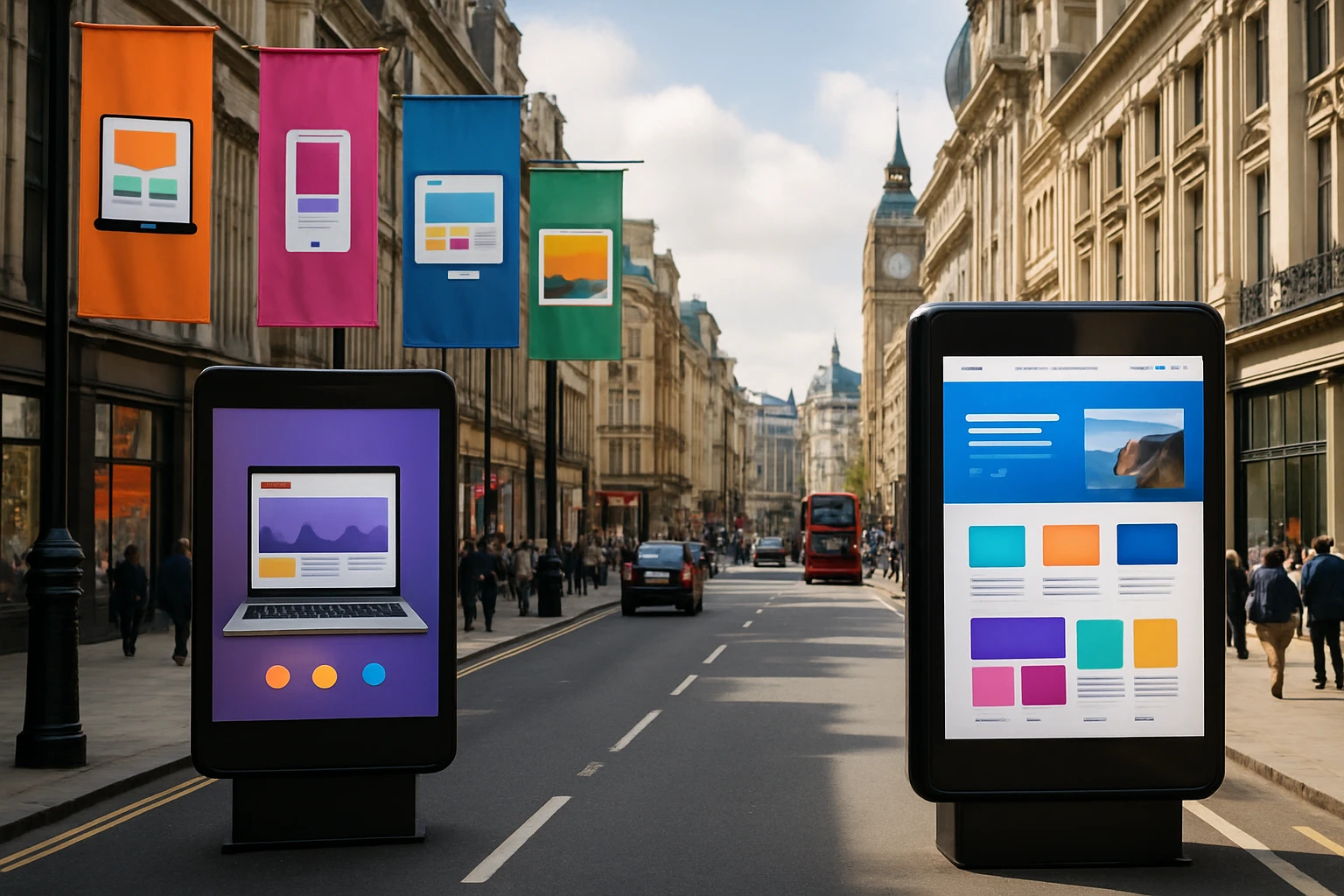
In a bustling London street, colorful banners hang from buildings advertising web design services, interspersed with sleek digital billboards showcasing vibrant website layouts against the backdrop of iconic city architecture.
Understanding the crucial role of user experience (UX) in website design can't be understated, especially in a diverse market like London. With countless businesses vying for consumer attention, offering a seamless and intuitive digital experience sets your brand apart. A focus on UX ensures that visitors not only find your website engaging but also easy to navigate, improving overall satisfaction and encouraging conversions.
London businesses have increasingly embraced this concept, as seen in the case of Selfridges, a renowned department store that redesigned its website with a significant focus on UX. By optimising the mobile experience and providing personalised shopping recommendations, Selfridges witnessed a substantial increase in mobile traffic and a 20 per cent boost in online sales. This example underscores the impact of user-centric design on commercial success.
Moreover, data shows that users form an opinion about a website within 0.05 seconds, emphasising the importance of first impressions. According to a study by the Stanford Persuasive Technology Lab, 75 per cent of users admit to making judgements on a company's credibility based on its website's design (source).
With the rise of mobile internet usage, it is essential for websites to be responsive, adapting seamlessly across various devices. A London-based restaurant, for instance, saw its online reservations triple after implementing a responsive design, ensuring customers had a smooth experience whether on a smartphone, tablet, or desktop. This trend reflects the growing necessity for businesses in competitive cities like London to cater to on-the-go consumers.
For those looking to enhance their digital presence, partnering with experienced professionals such as TWDA can be invaluable. TWDA specialises in creating responsive, aesthetically pleasing websites that cater to the unique needs of London's diverse clientele.
For more insights on building successful digital strategies, explore strategies from the Ai Implementation Roadmap, which offers step-by-step guidance for navigating digital transformations.
Creating an engaging user experience is fundamental to successful website design in London. To capture the attention of a diverse audience, designers need to balance intuitive navigation, visual appeal, and reliable performance. Local businesses thrive when their websites are not just attractive but also effortless to use, meeting the varied expectations of London's multicultural clientele.
User-centred design starts with understanding real people, not assumptions. A solid approach involves direct research — interviews, usability testing, and observation — to uncover what actually works for users. The Nielsen Norman Group has long emphasised that usability testing reveals exactly where people struggle, allowing designers to make targeted improvements that boost satisfaction and lower bounce rates.
Take a London-based e-commerce retailer that decided to overhaul its user interface. The goal was simple: make shopping faster and less frustrating. By applying responsive design techniques and stripping back a cluttered, multi-step checkout process, the company achieved a 30 per cent uplift in online sales. This real-world example shows how thoughtful website design in London can directly improve business results.
Staying ahead of design trends is crucial for maintaining a competitive edge in London's fast-paced market. Currently, there is a shift towards minimalism and clean interfaces that focus on essential elements, improving load times and user engagement. An example is the growing adoption of mobile-first design, which prioritises optimisation for smartphones and tablets to accommodate the increasing number of mobile users worldwide. Statista reports that there are over 6.6 billion smartphone users globally, underscoring the importance of mobile responsiveness.
Ultimately, the key to successful website design in London is simple: prioritise the user experience. By understanding and addressing what their audience truly needs, designers can create websites that are both visually appealing and seamless to use. This holistic approach keeps businesses competitive in London's dynamic market, fostering long-term customer loyalty and sustainable growth.
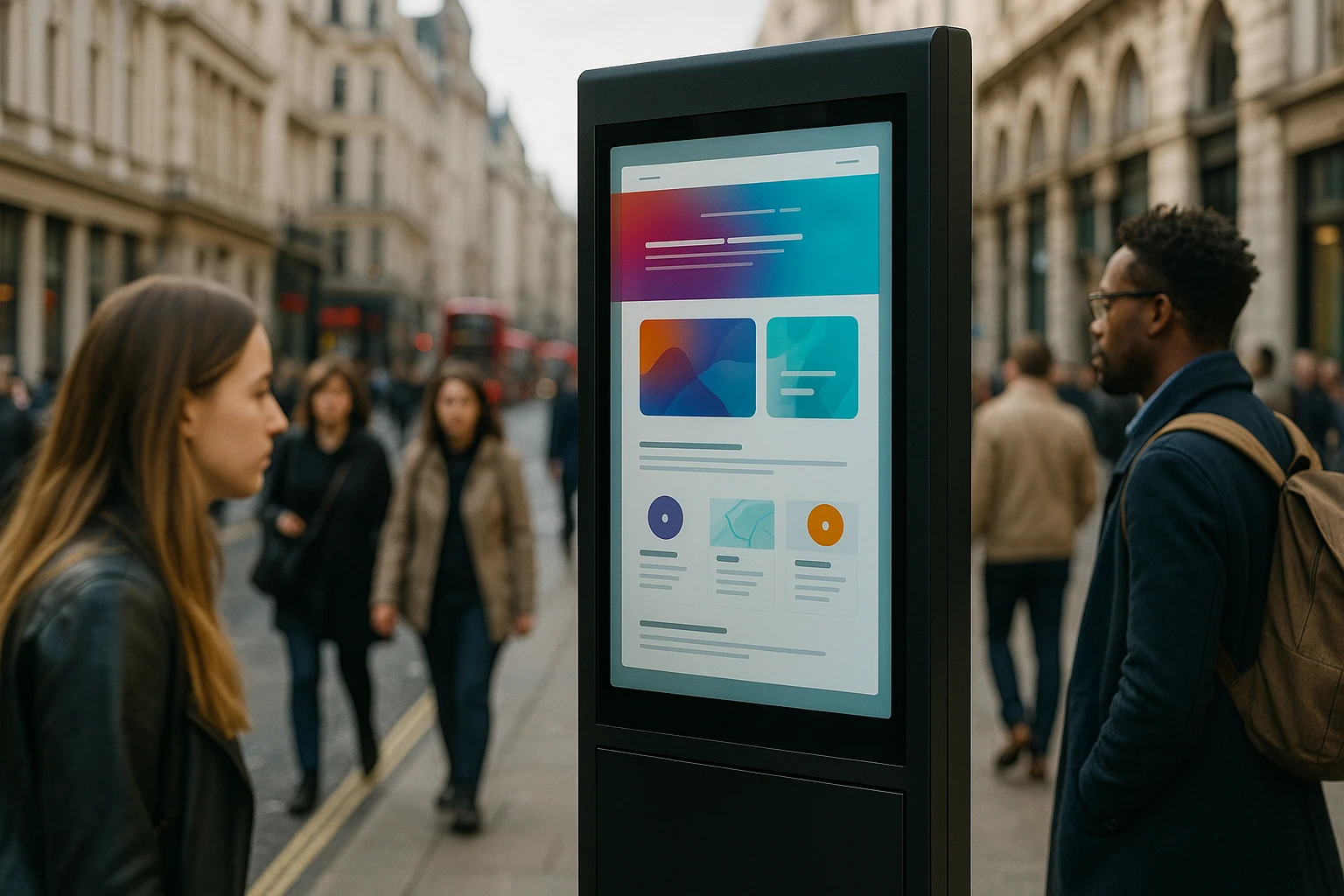
A close-up of a modern, interactive digital kiosk on a busy London sidewalk, with passersby engaged and vibrant graphics displaying a seamless website interface, framed by historic buildings in the background.
As the digital landscape continues to evolve, your website needs to stand out not only visually but functionally. With increasing competition in the market, especially in a vibrant city like London, mastering effective website design becomes crucial. A well-designed website can significantly enhance user experience, boost engagement, and drive business growth.
Investing in professional website design ensures that your site is not only aesthetically pleasing but also effectively communicates your brand's message. A strategic design fosters trust, encourages user interaction, and leads to higher conversion rates. Remember, your website is often the first point of contact with potential customers; make that impression count.
Ensure your website is mobile-friendly. With a growing number of users accessing sites on their devices, a responsive design is no longer optional.
Regularly update your content to keep it fresh and relevant. Engaging blogs, insightful articles, and customer testimonials can enhance your site's value.
Use analytics tools to monitor user behaviour and optimise your website design for better user experience.
Include clear calls to action that guide users towards your desired outcomes, such as sign-ups or purchases.
To build on these insights and revolutionise your online presence, consider leveraging professional services. TWDA can guide you through a comprehensive website design process, ensuring your site meets industry standards whilst aligning with your unique brand identity. Their expertise in website design in London positions them as a valuable resource to propel your business forward.
Harnessing the power of expert design and strategy can set the stage for long-term success. By prioritising effective design and user experience, you can not only enhance your brand's visibility but also create lasting connections with your audience. Whether you are launching a new site or revitalising an existing one, the right design is your gateway to a broader audience and increased customer loyalty.